

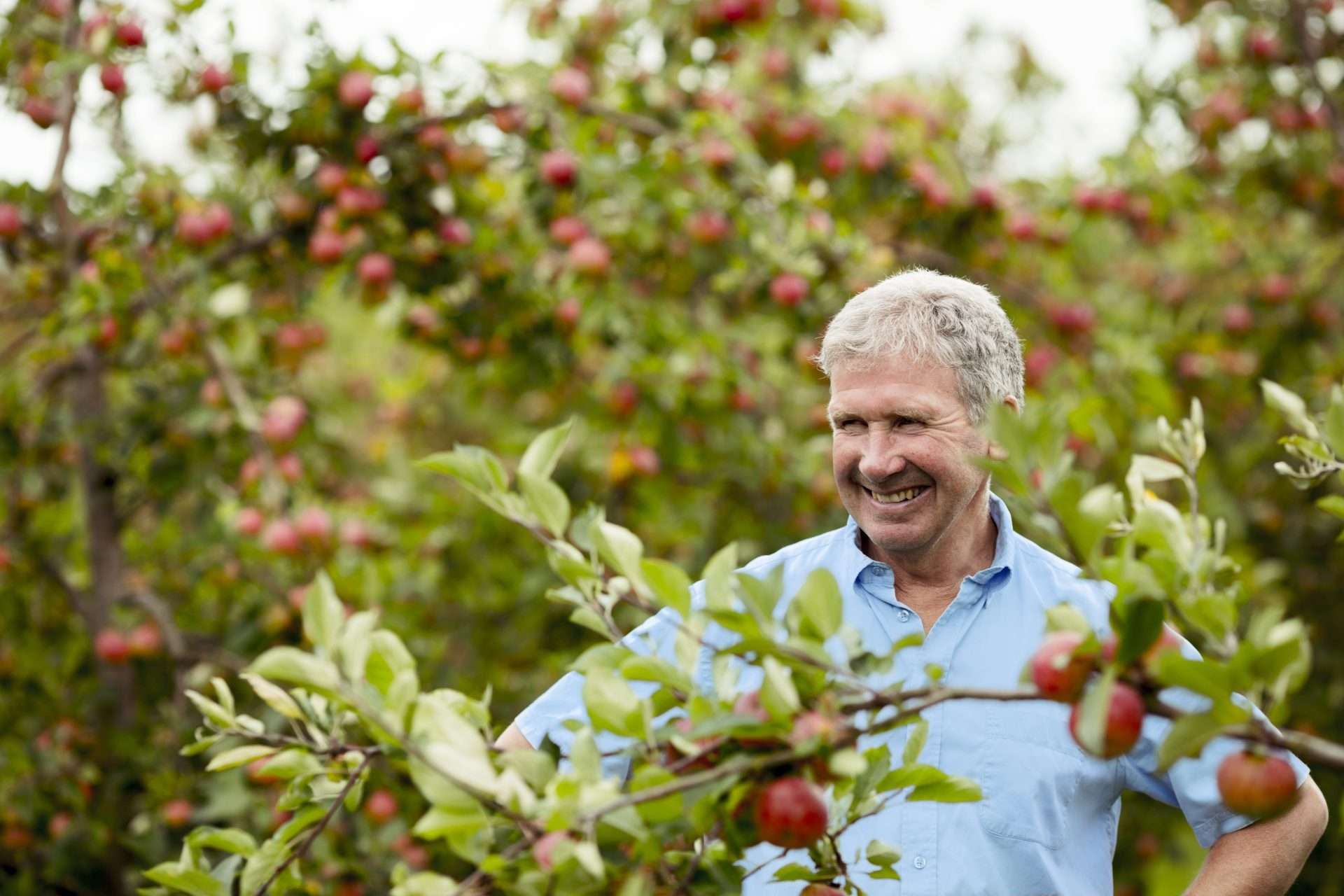
Despite its sleepy location in rural Herefordshire, Westons Cider is a major operation – and the largest of its kind as an independently owned cider mill in a sea of corporately-owned players. Jo Gilbert reports from a recent visit, where the team behind the Henry Westons and Stowford Press brands have been going through a period of self-reflection and expansion, including a £5m investment in upgrading storage capacity for its juice
Set among the rolling orchards of Much Marcle in Herefordshire, Westons Cider has long been a cornerstone of English tradition. The Bounds – a 17th-century farmhouse and working mill that’s been home to five generations of cider makers – still hums with the rhythm of harvest, pressing and oak-vat maturation. But behind the heritage façade, the business is quietly scaling up, investing millions to meet demand while keeping to its founding principle of making cider made only from fresh juice.
“We don’t make it the easy way,” says fifth-generation cider maker Guy Lawrence, who is the great-great-grandson of founder Henry Weston. “No fruit from concentrate, all fresh juice – it’s an expensive way of doing things, but the right way.”
Westons now produces 65 million litres of cider a year, all made, matured and packaged on site, and exports to 44 countries worldwide. While operations briefly stretched as far as Australia, the logistics proved too complex.
“It’s such a big country,” Darryl Hinksman, head of business development told Drinks Retailing during a recent visit. “We decided to focus on doing what we do best here in Herefordshire.”
What also became clear from last week’s visit, is that the focus on local production, made from fruit within the three countries of Herefordshire, Gloucestershire and Worcestershire, is paying off. Henry Westons Vintage has now overtaken Strongbow to become the UK’s biggest cider in the off-trade (Circana figures for the w/c 6th September 2025), while Stowford Press continues to anchor the business’s on-trade presence.
Together, the two account for the lion’s share of Westons’ production, supported by a small but growing organic range.
“We had more brands before, like Wildwood and Mortimer’s, but since 2021 we’ve streamlined to focus on Henry Westons and Stowford Press,” shared brand manager Holly Chadwick, who has previously worked for C&C Group and Shepton Mallet Cider Mill. “Henry Westons has always been stronger in the off-trade, while Stowford has been more of a pub favourite, but both are still growing.”
Around 65-75% of total sales now comes via the off-trade, compared to a near-50/50 split before Covid. Around 20% of production is own-label cider for both on and off-trade customers. According to Westons, this accounts to a healthy mix, given its deep roots with local growers.
“Supermarkets want all their ciders to be made from apples from within a 50-mile radius, and that’s exactly what we do,” says Lawrence. “Ninety per cent of our fruit comes from the three counties, and they are all cider apple varieties (bittersweet or bittersharp), slow-matured and never culinary varieties.”
From orchard to tank
Westons currently owns 350 acres of orchard, 45 of which are organic, and sources the majority of its fruit to the tune of 40,000 tonnes a year. Some of these grower relationships stretch back over a century.
“Over 30 apple varieties come in here each season,” says Lawrence. “Some ripen early, some late, so we can spread out the pressing season. This year’s harvest started in late August, which is earlier than usual, because of the dry weather. The sugar levels are high, but the apples aren’t quite as juicy, so we expect an average volume overall.”
By early autumn, around 700 tonnes of apples a day roll into the mill for pressing. The process, made entirely using fresh fruit rather than concentrate, requires significant storage capacity, which explains Westons’ latest £5m investment in new fermentation tanks, which will add 4.5 million litres of extra capacity when they come online over the next few months.
The new tanks are conical-bottomed, allowing sediment and yeast to settle naturally and be removed more efficiently.
“The only thing that’s really changed over the years is the technology,” Lawrence explains. “We’ve invested in a heat exchanger too, which means we can work more efficiently, but the principles are the same.”
A yeast propagation plant is also being installed, allowing Westons to cultivate and reuse its own strains in another nod to self-sufficiency and quality control.
“We don’t use temperature control, because it uses a lot of energy,” Lawrence continues. “We’re not trying to rush fermentation, which usually takes one to two weeks. Instead, we use different yeast strains that are more efficient and allow us to do longer maturation, which is always a minimum of six months.”
Balancing heritage and innovation
Even with the new tanks, Westons’ defining visual feature remains its 42 oak vats, some of which are more than 200 years old and still in daily use. The largest hold 200,000 litres, the smallest 5,000 litres, with each adding subtle layers of complexity and oxygenation to the cider.
“Traditionally, we’ve always stuck to juice-only cider, and we’ll continue to do that,” says Lawrence. “We tend to ferment to slightly higher alcohol, which makes the cider more seasonable and softens the tannins. It’s a balance of old and new; the right amount of complexity, with the right respect for our heritage.”
Westons’ signature Henry Westons Vintage (8.2% abv) remains the jewel in the portfolio and is the UK’s number-one cider by value in the off-trade. Stowford Press (4.5% abv), meanwhile, is the quintessential medium-dry, sessionable draught cider, “classic, clean and consistent,” Chadwick says.
Closing the loop on sustainability
Westons’ cidermaking is rooted in the land, and sustainability runs through the operation. For example, water for the mill comes from the surrounding wetlands and is naturally purified before use. From here, head of production Giles Goodwin is leading efforts to go a step further.
“We want to install a reverse-osmosis plant to turn wastewater into potable water and put it back into production. Plenty of places in Europe already do this. Once it’s purified, there’s no reason not to reuse it. It just makes sense,” he says.
Solid waste, including apple pomace, goes to an anaerobic digestion (AD) plant to create biogas and nutrient-rich fertiliser. The same principle is used by Thatchers and others to convert waste into green energy. Westons also captures and reuses carbon dioxide from fermentation to carbonate its own products, reducing its reliance on purchased CO₂.
Scaling up for a modern market
As for cider trends, Lawrence says taste is cyclical.
“Right now, the market’s more medium-sweet, but dry cider will come back,” he predicts. “Consumers move in waves. What matters is making a cider with character and authenticity, something that speaks of the fruit and the place.”
The market may be fragmenting, but Westons remains committed to apple-based products, which is driving the majority of growth within the broader cider category.
As Chadwick points out, “Apple is about 60% of the UK cider market. We’re making what the market wants.”
After a tour of the orchards, where trees are rattled into giving up with fruit, The Bounds is in full flow. At this time of year, pressing continues over 24-hour cycles, often overnight, where this year’s vintage is currently taking shape.
“We’re doing very well,” Lawrence says with quiet understatement. “We need more cider, and that’s a good problem to have. But we want to do it the right way, with the right amount of complexity and sticking to our heritage. That’s what’s kept this place going for five generations.”
Top photo shows Tim Weston, director and fourth generation of the Weston family
